
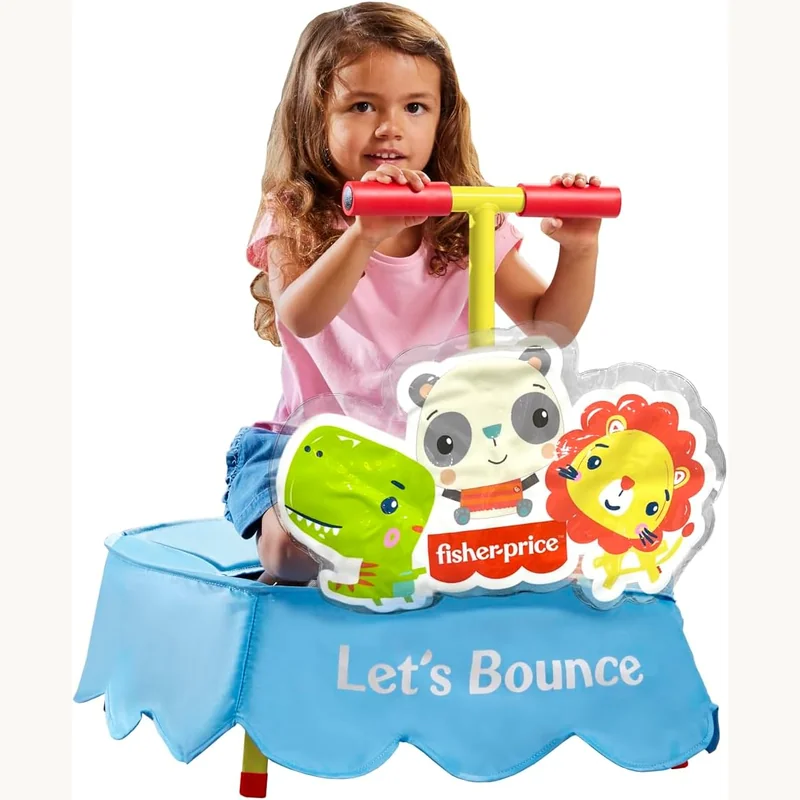
My First Trampoline
Compact 1.9 ft indoor starter with a padded surround and supportive handlebar for first hops from around 12 months.
Check PriceEvery trampoline in the Fisher-Price range has a maximum user weight that sets a clear boundary between safe use and risk. This guide lists the published weight limits for the four main UK models and explains how to match them to your child, how the limit is tested, and why it matters even more on smaller indoor models.
View offers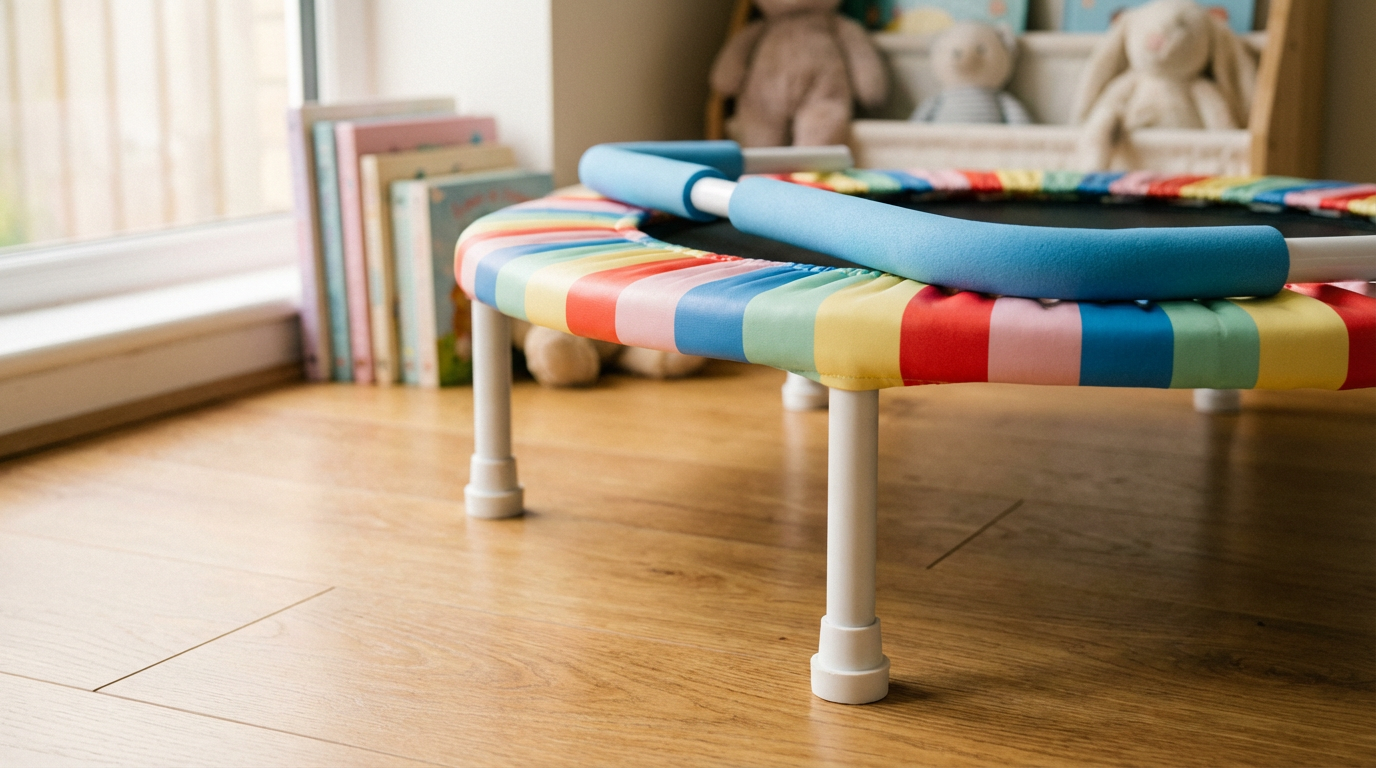
Use these four sizes as a quick reference while you check max-user weights and leave head-room for growth.
Compact 1.9 ft indoor starter with a padded surround and supportive handlebar for first hops from around 12 months.
Check Price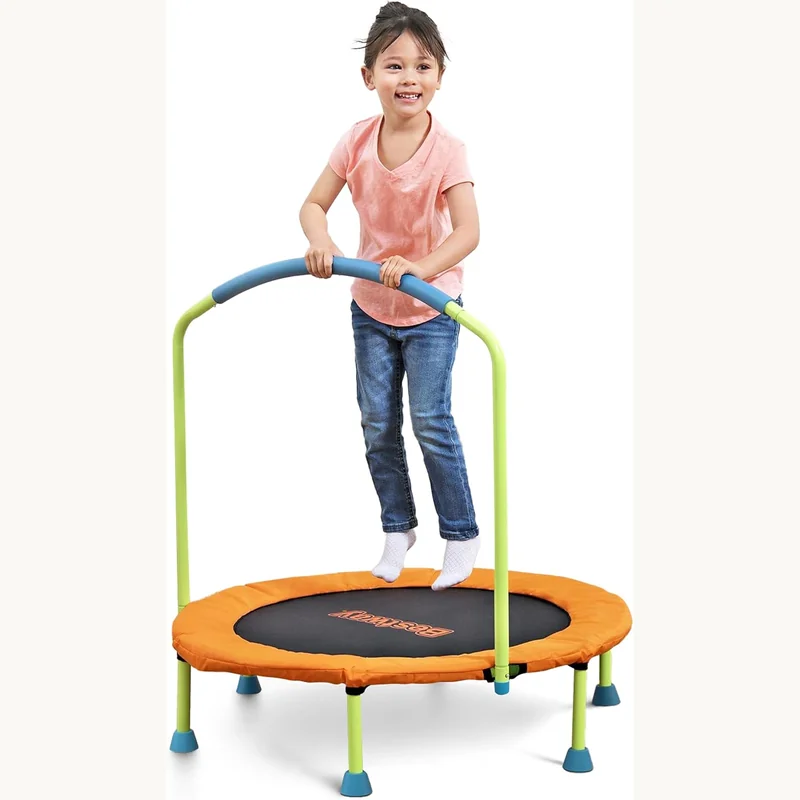
Foldable 3 ft mini with a foam-grip handle and non-slip feet, suited to preschoolers who have outgrown the smallest deck.
Check Price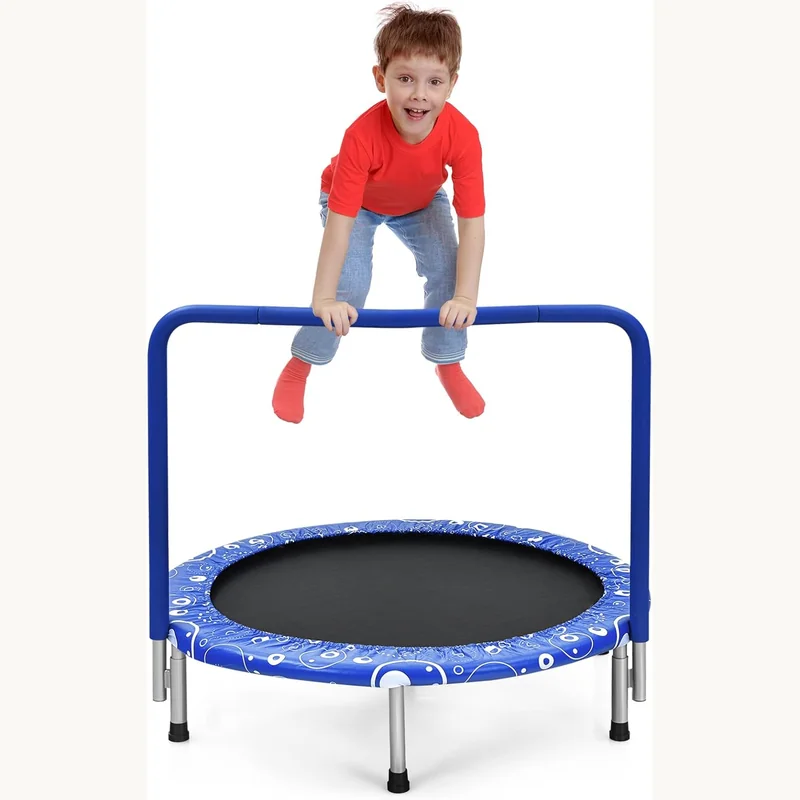
36-inch indoor junior rebounder with removable handrails for ages three and up who want a firmer, taller bounce.
Check Price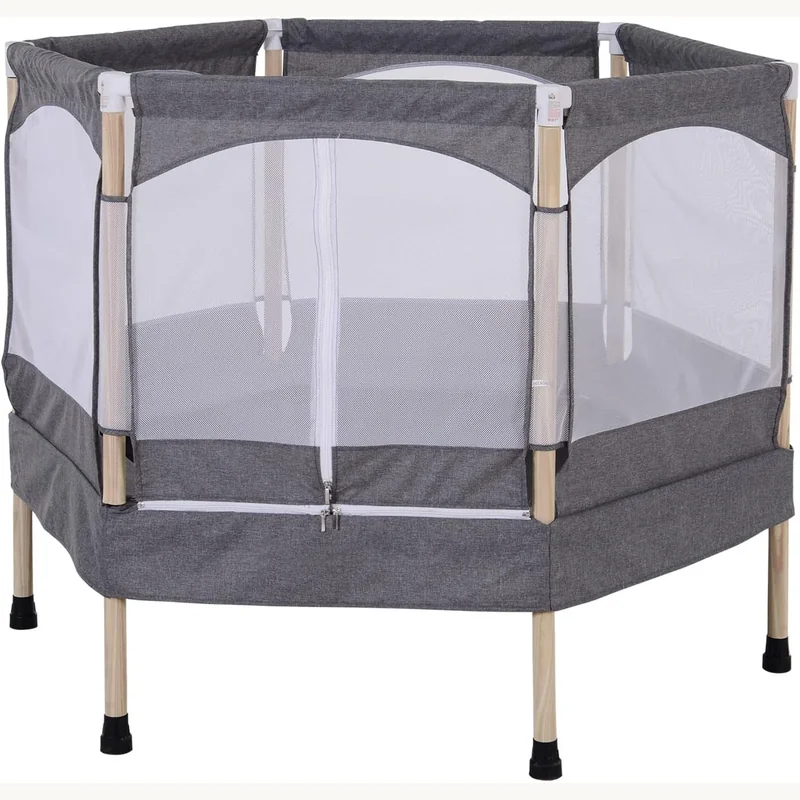
Garden-ready kids trampoline with a full safety enclosure for confident outdoor bouncing under adult supervision.
Check PriceThe weight limits below are taken from the manufacturer's own packaging and instruction booklets for each UK-sold model. Always treat them as a hard ceiling, not an average target, and re-check your own booklet for the batch you own.
| Model | Age range | Max weight |
|---|---|---|
| My First Trampoline (1.9 ft) | 12–36 months | ~25 lb / 11 kg |
| WonderJump 36-inch Mini | 3+ years | 55 lb / 25 kg |
| Junior Trampoline (~4 ft) | 3–6 years | ~75 lb / 34 kg |
| 4.5 FT Outdoor with net | 3–8 years | ~100 lb / 45 kg |
Manufacturer specifications are updated from time to time. Always defer to the booklet packaged with your own trampoline.
Each Fisher-Price frame — from the 1.9 ft toddler bouncer to the 4.5 ft garden model — is engineered with a specific dynamic load in mind. A bouncing child puts forces on the frame that can reach two to three times their body weight at the peak of a jump. The stated weight limit builds a safety margin around the expected peak load, not just the child's static weight.
Jumpers who are close to or over the limit cause the springs to stretch further and the mat fabric to tension harder each cycle. Over weeks and months this accelerates sag, reduces bounce height, and eventually causes the trampoline to feel "dead" well before its expected lifespan.
The handlebars on the indoor toddler and junior models are designed to guide balance, not to take an adult's weight. Testing a toddler trampoline by standing on it yourself "just to check" can bend the uprights and void the warranty.
On the 4.5 ft outdoor model, the net, spring pad and pole padding are specified with children up to around 45 kg in mind. A jumper heavier than that can displace the net fabric or push springs past their intended deflection.
It is easy to look at a figure like 55 lb or 25 kg on the WonderJump box and assume it is only relevant once your child reaches that weight. In reality, the limit sets the upper boundary for how the mat, springs and frame behave — so the closer a child is to the limit, the more noticeable any small loss of bounce becomes. Children under around 15 kg will get a very consistent, gentle bounce from the WonderJump; children hovering around 22 to 24 kg will still be within spec, but the trampoline will feel firmer and the mat will stretch more on each jump.
The same principle applies across the range. On My First Trampoline, designed for children from 12 to 36 months, the 11 kg limit leaves plenty of headroom for an 18-month-old weighing 10 kg but very little for a sturdy three-year-old. On the 4.5 ft outdoor model, children at the lower end of the 3 to 8 age band typically bounce at around 15–18 kg and barely tension the springs; older seven-year-olds at 35–40 kg will bring the springs closer to their full working range.
Because each trampoline is specified as a single-user product, never think of the limit as a "total" that can be shared between a parent and child or between two siblings. The dynamic forces from two jumpers, even if their combined weight is under the limit, are very different from one jumper and can damage the mat or frame.
No. The 4.5 ft outdoor model is rated for children and is not a fitness rebounder. Adults should use a dedicated adult-rated trampoline.
No. The frame and mat are designed for a single toddler up to around 11 kg. Taking turns is safer and more fun.
Consider moving up to the Junior Trampoline or 4.5 FT outdoor model, which have higher weight ratings.
The rating is simply the total weight of the jumper. Trampolines should generally be used in non-slip socks or bare feet, never in shoes.
Compare the toddler and junior ranges side by side, or read real parents' impressions of long-term use in the reviews section.